Introduction
The Testing Pyramid is a foundational concept in software testing that helps teams balance efficiency and coverage. But what exactly is it, and how can it improve your QA process? Let’s break it down.
What Is the Testing Pyramid?
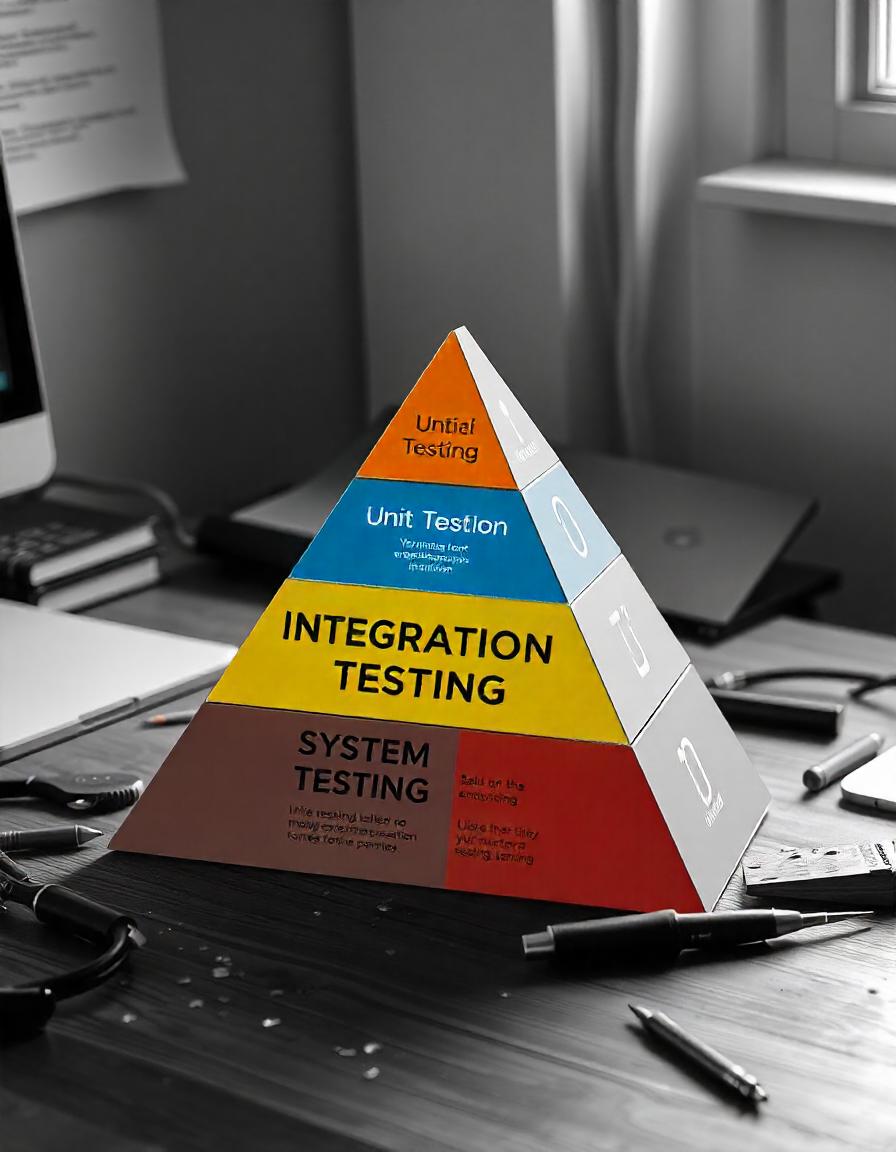
The Testing Pyramid is a model that represents the ideal distribution of tests in a software project. It consists of three layers:
- Unit Tests: Fast, low-level tests that verify individual components.
- Integration Tests: Tests that check how different components work together.
- End-to-End (E2E) Tests: High-level tests that simulate real user scenarios. The pyramid shape emphasizes having more unit tests at the base and fewer E2E tests at the top.
Why Is the Testing Pyramid Important?
- ✅ Efficiency: Unit tests are fast and cheap to run, while E2E tests are slower and more expensive.
- ✅ Reliability: A solid base of unit tests catches issues early, reducing the need for extensive E2E tests.
- ✅ Scalability: The pyramid model scales well as your project grows.
Common Mistakes to Avoid
- ❌ Inverted Pyramid: Too many E2E tests and not enough unit tests.
- ❌ Ignoring Integration Tests: Focusing only on unit and E2E tests.
- ❌ Over-Reliance on Manual Testing: Not automating tests at all levels.
How to Implement the Testing Pyramid
- Start with Unit Tests: Write tests for individual components first.
- Add Integration Tests: Ensure components work well together.
- Use E2E Tests Sparingly: Focus on critical user workflows.
- Automate Where Possible: Use tools to automate tests at all levels.
Conclusion
The Testing Pyramid is a powerful framework for balancing efficiency and coverage in software testing. By following this model, you can catch issues early, reduce costs, and deliver high-quality software. Ready to optimize your testing strategy? Let’s get started!